The Department of Defense has ordered 30 U.S. universities to quickly review their partnerships with foreign universities and military training institutions, most of them tied to China, according to reporting adapted from the Associated Press.
The Pentagon said Monday that schools must complete the audits and end any arrangements deemed problematic within two weeks or risk losing funding.
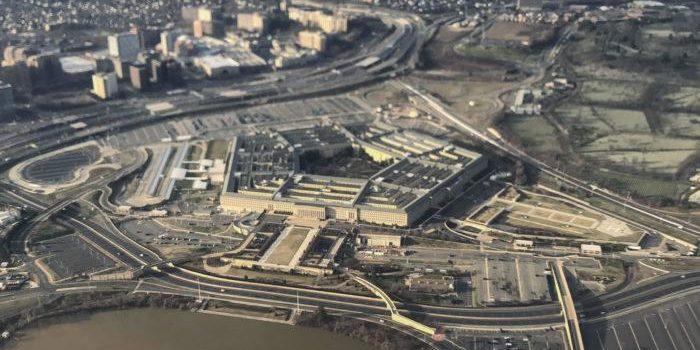
The department said the effort is intended to protect taxpayer-funded research from theft and exploitation.
“The Department of War has zero tolerance for academic partnerships that compromise our national security,” Emil Michael, the Pentagon’s chief technology officer, said in a news release.
Schools Not Publicly Named
The Pentagon’s release did not identify the 30 schools. However, a U.S. official who spoke on condition of anonymity to discuss internal matters told the Associated Press that Harvard University, the Massachusetts Institute of Technology and Johns Hopkins University are among them.
The order follows the Pentagon’s release last month of an updated list of 130 foreign institutions it accused of engaging in “activities that increase the likelihood of U.S. government-funded research and development efforts being misappropriated.”
Most institutions on that list were Chinese, including the University of Science and Technology of China and China’s Academy of Military Medical Sciences. Several Iranian and Russian institutions were also included.
Higher Education Group Pushes Back
Sarah Spreitzer, vice president at the American Council on Education, which represents college and university presidents, raised concerns that the Pentagon’s announcement suggests schools are engaged in wrongdoing without presenting evidence.
Spreitzer said the first version of the foreign institutions list was developed during President Donald Trump’s first term with help from the American Council on Education. She said many member institutions moved away from research partnerships with listed entities in the years afterward.
She also warned that U.S. schools could be held liable for partnerships that existed before the list was created.
China Dispute Widens
The audit comes as the Trump administration has increased scrutiny of China’s influence in the Americas, including Chinese ownership of ports at both ends of the Panama Canal, Belt and Road infrastructure projects in the region, and Chinese investment in telecommunications.
The Justice Department is also investigating whether Harvard University is allowing Chinese donors to create scholarships that exclude American students, according to the Associated Press. That investigation is part of a broader set of federal inquiries involving the Ivy League school.
A spokesperson for the Chinese embassy said China opposes what it called the politicization of “normal scientific, educational, and academic exchanges.”
“The U.S. side,” the statement said, “should abandon the Cold War mentality and foster an open, fair, and non-discriminatory environment for educational, scientific, and people-to-people exchanges between China and the United States.”