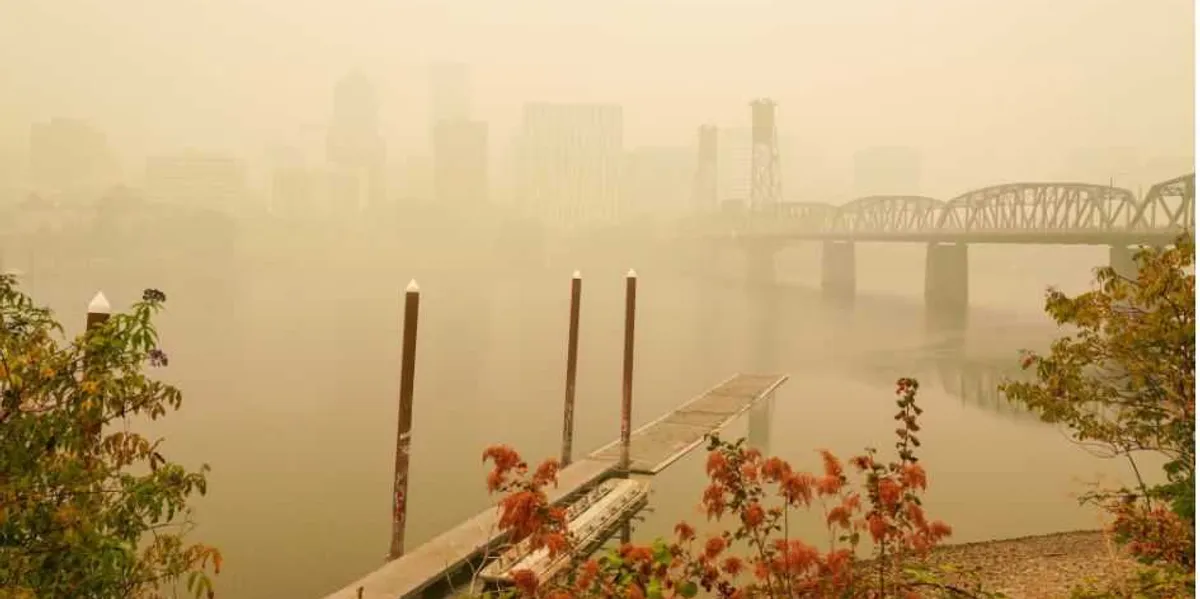
Portland residents have learned the wildfire smoke routine.
Stay inside. Check the air-quality map. Close the windows. Seal the gaps if conditions get bad enough. Wear a mask if leaving the house cannot be avoided.
That grim familiarity is the central concern in a recent Daily Allegiant source essay, which argues that wildfire smoke has become so common in Oregon that many residents now treat it as seasonal background noise rather than a preventable emergency.
The writer describes a recent smoke event in Portland as severe enough to make eyes burn and breathing uncomfortable. The episode, the essay says, brought back memories of the 2020 wildfire disaster, when Oregon endured some of the most destructive fires in state history and thick smoke blanketed Portland for days.
The piece is not just about smoke. It is about resignation.
After the 2020 fires, Oregon committed nearly $200 million toward wildfire prevention and preparedness, according to the source essay. The promised goals included more prescribed burning, more fuel reduction and healthier, more resilient forests.
The author’s criticism is that, years later, many residents can see the agencies, plans and public messaging — but struggle to see clear results when smoke again settles over the city.
That is an opinion, not a full audit of Oregon’s wildfire programs. State officials and wildfire managers would likely point to the scale of the problem: hotter and drier conditions, accumulated fuels, development near fire-prone landscapes and the complexity of using prescribed burns safely. The source text does not include their response, so those claims require separate reporting.
Still, the frustration it captures is real enough to matter politically.
In 2020, the essay recounts, Portland was already under strain from COVID restrictions and civil unrest when wildfire smoke arrived. The writer, citing past respiratory problems, says he left the city and drove east toward Pendleton, only to find smoke following behind. He continued to Boise, then Pocatello and Salt Lake City, watching weather and air-quality maps as Portland remained under dangerous conditions.
Back home, friends were reportedly taping windows and doors, staying indoors with children and pets, and waiting for the air to clear.
The recent event, by comparison, lasted about four days, according to the essay. It was not as extreme as 2020, the writer says, but Portlanders knew what to do because they had already lived through worse.
That may be the most uncomfortable point.
Public adaptation can save lives. Knowing when to stay indoors, how to reduce smoke infiltration and where to find reliable air-quality information is useful. But adaptation can also dull outrage. If every bad smoke week is simply filed under “wildfire season,” public pressure for prevention, forest management, emergency planning and accountability may fade.
The debate is not as simple as one political slogan. Climate conditions, land management, forest density, utility risk, arson, wind events and local preparedness can all shape wildfire danger. Different factions emphasize different causes, and the source essay argues that Oregon’s public conversation has shifted away from solutions and toward acceptance.
Whether that criticism is fair depends on facts not fully established in the source: how Oregon’s post-2020 money was spent, which projects were completed, how much prescribed burning actually increased, and what measurable effect those efforts had.
But the broader question is hard to dismiss: when a city becomes expert at hiding indoors from smoke, is that resilience — or a warning sign that something has gone badly wrong?