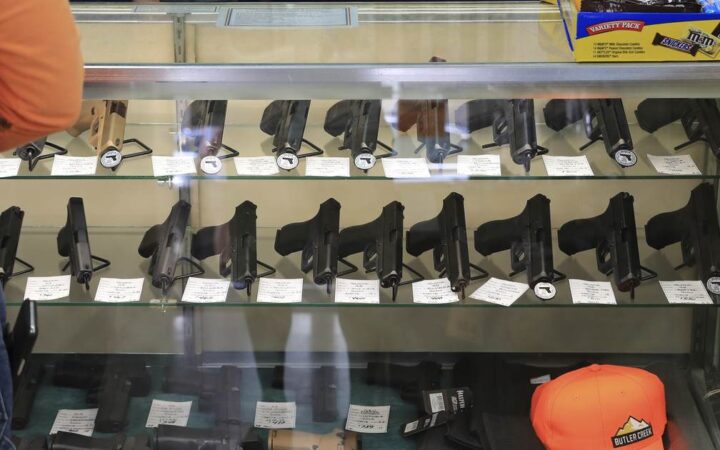
Florida Attorney General James Uthmeier has delivered another significant development for gun owners in the state by clarifying that possession of short-barreled rifles (SBRs) and short-barreled shotguns (SBSs) is no longer subject to prosecution under state law. This announcement builds on his previous actions supporting Second Amendment rights, though the latest ruling may be more temporary in nature.
Legal Shift on Short-Barreled Firearms in Florida
Under Florida Statute 790.221, possession of short-barreled rifles, short-barreled shotguns, and machine guns is classified as a second-degree felony, with certain exceptions for firearms lawfully owned under federal law. Uthmeier’s office has reviewed recent federal developments and concluded that these exceptions now extend to SBRs and SBSs, effectively making it lawful for law-abiding Floridians to possess these firearms without fear of state prosecution.
Uthmeier emphasized that this interpretation is a legal opinion rather than a repeal of the statute by the Florida Legislature. His memorandum reflects a careful analysis of evolving federal regulations and court rulings.
Federal Changes Driving State Interpretation
The backdrop to this state-level shift involves federal legislation and judicial rulings affecting the National Firearms Act (NFA), which regulates certain firearms including SBRs and SBSs. The One Big Beautiful Bill Act eliminated making and transfer taxes on short-barreled firearms and suppressors. Following this, a federal judge in Texas issued an injunction, ruling that without these taxes, Congress lacks authority to require registration of NFA items.
As a result, the Department of Justice and the Bureau of Alcohol, Tobacco, Firearms and Explosives (ATF) have adopted the position that NFA items can now be acquired through the same process as non-NFA firearms. This federal stance underpins Uthmeier’s interpretation that Florida’s statute no longer prohibits possession of SBRs and SBSs.
Potential for Future Reversals
Despite the current favorable environment, the legal landscape remains uncertain. The Florida statute has not been repealed, and the NFA itself remains intact at the federal level. Should the incoming Democratic majorities in Congress reinstate the tax on these firearms, the federal injunction could be overturned, reinstating the registration requirements.
Such a change would undermine the DOJ and ATF’s current position and, by extension, Uthmeier’s legal interpretation. A future administration could reverse the policy, making possession of these firearms vulnerable to prosecution once again.
Any federal reinstatement of NFA taxes and registration would likely include an amnesty period for those who acquired suppressors and short-barreled firearms under the current rules. Nonetheless, the possibility of legislative reversal highlights the fragility of this victory for gun owners.
Political Dynamics and Budget Battles
The elimination of NFA taxes was achieved through the Republican-led reconciliation process, and Democrats could similarly use reconciliation to restore them. Given the current political climate, including potential budget impasses and government shutdowns, the status of these tax provisions remains uncertain.
How these federal budget battles will impact NFA regulations and enforcement is unpredictable. The White House is expected to strongly oppose Democratic budget proposals, which could influence the fate of the tax and registration requirements.
Conclusion: A Win with Caveats
Attorney General Uthmeier’s recent legal interpretation marks a notable win for Florida gun owners, expanding their ability to possess short-barreled rifles and shotguns without fear of prosecution. However, this victory is contingent on the current federal regulatory environment, which could shift with changing political leadership.
Ultimately, more enduring Second Amendment victories may depend on federal courts willing to address the constitutionality of the National Firearms Act itself. Until then, gun owners remain subject to the ebb and flow of legislative and executive actions at the federal level.
Source: Read the original reporting.