For years, Dick Heller carried a handgun as part of his job guarding federal buildings in Washington, D.C. Yet, when he returned to his home in southeast D.C., the law forbade him from keeping a firearm there. This stark contradiction became the foundation of a landmark Supreme Court case that reshaped Second Amendment law in America.
The Nation’s Toughest Gun Restrictions
In 1975, the District of Columbia enacted the Firearms Control Regulations Act, one of the strictest gun laws in the United States. The legislation effectively banned handguns by prohibiting residents from registering new firearms after the law’s enactment. Only handguns registered prior to the law’s passage were legally owned, making possession of unregistered handguns a criminal offense.
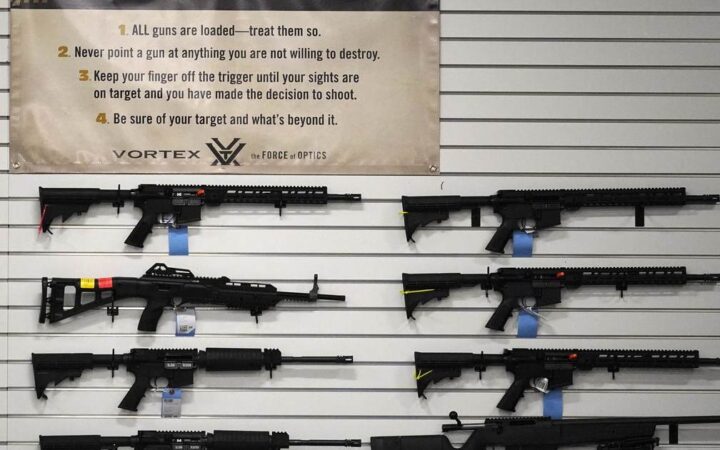
Even rifles and shotguns were heavily regulated. They had to be stored unloaded and either disassembled or secured with a trigger lock. This meant that in an emergency, a lawful gun owner would face significant delays in accessing their weapon for self-defense.
For over three decades, these restrictions defined gun ownership in the nation’s capital, creating a legal environment that conflicted with the realities of personal protection.
A Lawyer’s Quest for a Second Amendment Test Case
The legal battle began not with Heller himself but with Robert Levy, a constitutional scholar and senior fellow at the Cato Institute. Although Levy had never owned a gun, he believed the Second Amendment protected an individual right to bear arms. In 2002, he sought out plaintiffs willing to challenge D.C.’s stringent gun laws.
Levy, alongside attorneys Clark Neily and Alan Gura, recruited six residents from diverse backgrounds and neighborhoods, many of which were plagued by crime. Among them was Shelly Parker, a software designer and former nurse who had faced threats and attempted break-ins by drug dealers in her community.
Another plaintiff was Dick Heller, a licensed special police officer who had lived near a public housing complex that had become a hub for drug activity. Despite his armed duties, the city denied his request to keep a handgun at home, prompting him to join the legal challenge. Notably, the National Rifle Association initially declined to support Heller’s case.
Legal Hurdles and Narrow Standing
The six plaintiffs filed suit in early 2003. However, a federal district court dismissed the case in 2004. On appeal, the court scrutinized whether each plaintiff had the legal standing to sue. It found that only Heller had standing because he had formally applied for a handgun license and was denied. The other plaintiffs were dropped, which is why the case is known as District of Columbia v. Heller.
In 2007, a federal appeals court ruled 2-1 in favor of Heller, invalidating both the handgun ban and the trigger-lock requirement. The District of Columbia then petitioned the Supreme Court to review the decision.
Behind the Scenes: NRA’s Complex Role
The litigation featured an unusual subplot involving the National Rifle Association. Although the NRA initially refused to take on Heller’s case, it later attempted to influence the proceedings, including efforts to merge Heller’s lawsuit with a separate NRA-backed case. Heller’s legal team described these moves as “sham litigation” and noted repeated attempts by the NRA to derail their efforts.
Eventually, the NRA filed a friend-of-the-court brief supporting Heller’s position before the Supreme Court.
The Supreme Court’s Defining 2008 Ruling
On June 26, 2008, the Supreme Court issued a narrow 5-4 decision in favor of Heller. Justice Antonin Scalia authored the majority opinion, which affirmed that the Second Amendment protects an individual’s right to possess firearms unconnected to militia service. The ruling emphasized that this right includes using firearms for lawful purposes such as self-defense within the home.
The Court struck down D.C.’s handgun ban as a complete prohibition on a class of arms commonly chosen for self-defense, deeming it unconstitutional. It also invalidated the trigger-lock requirement, noting that it effectively prevented citizens from using firearms for their core lawful purpose.
However, the Court acknowledged that the right to bear arms is not unlimited. It left intact longstanding regulations, including bans on firearm possession by felons, restrictions in sensitive places like schools and government buildings, and certain commercial sales conditions.
Four justices dissented, arguing that the Second Amendment was tied to militia service and that D.C.’s law was a permissible regulation.
Aftermath and Broader Implications
The ruling required the District of Columbia to allow Heller to register and keep a handgun at home, assuming he met other legal qualifications. Because D.C. is a federal district, the Court did not explicitly extend the ruling to states and cities.
That gap was addressed two years later in McDonald v. City of Chicago (2010), where the Supreme Court held that the Second Amendment applies to state and local governments. Further developments came in 2022 with New York State Rifle & Pistol Association v. Bruen, which recognized a right to carry handguns in public for self-defense.
Today, virtually every major Second Amendment case in American courts traces its origins back to District of Columbia v. Heller.
Why Heller’s Story Endures
At its core, the case posed a straightforward question: if a man is trusted to carry a gun to protect federal property, why can’t he keep one to protect his own home? This simple contradiction, highlighted by Heller’s experience, compelled the Supreme Court to clarify the scope of individual gun rights.
While the ruling affirmed an individual right to possess firearms, it did not eliminate all gun regulations. Laws on registration, storage, carrying permits, and transport continue to vary widely across states and cities. Gun owners must remain informed about local laws before purchasing or carrying firearms.
Heller’s journey from armed federal guard to the center of a constitutional battle underscores the ongoing tensions in America’s gun policy debates and the evolving interpretation of the Second Amendment.
Source: Read the original reporting.