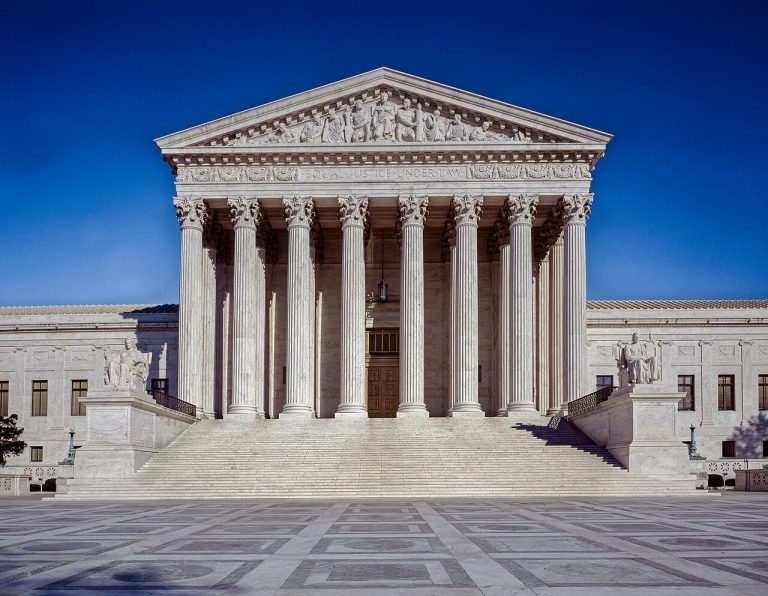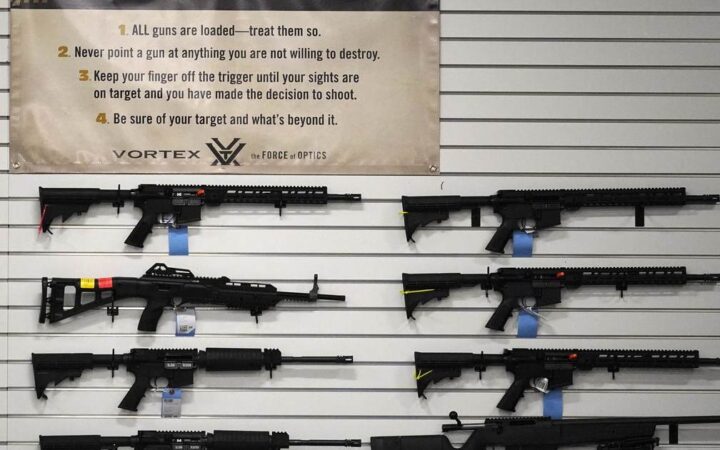
Canada’s Supreme Court is currently hearing a pivotal case challenging the federal government’s broad ban on semi-automatic firearms. The legal battle centers on whether Prime Minister Justin Trudeau’s 2020 Order in Council, which prohibits military-grade assault weapons, exceeded the government’s legal authority and infringes on the rights of lawful gun owners.
Background: Trudeau’s Ban and Its Origins
The ban was introduced shortly after a tragic mass shooting in Nova Scotia in April 2020 that resulted in 23 deaths, including the shooter. In response, then-Prime Minister Trudeau announced a prohibition on military-style assault weapons, aiming to enhance public safety by restricting access to firearms deemed too dangerous.
This ban was implemented through an Order in Council, a Cabinet directive similar to an executive order in the United States, rather than through legislation passed by Parliament. The Canadian Criminal Code grants the Cabinet authority to regulate firearms if it determines certain weapons are not reasonably used for hunting or sports shooting.
Legal Challenge: Overreach or Legitimate Action?
The Canadian Coalition for Firearm Rights has contested the ban, arguing that many of the firearms targeted have historically been used for hunting and sport. Their counsel, Michael A. Loberg, contends that the Cabinet exceeded its powers by issuing the ban without parliamentary approval, violating the limits set by the Criminal Code.
Lower courts, including the Federal Court and the Federal Court of Appeal, previously dismissed these challenges. They upheld the government’s position that public safety concerns justified the ban.
Supreme Court Deliberations: Balancing Rights and Safety
During oral arguments, justices scrutinized whether the gun owners adequately weighed public safety against their interests. Justice Glenn D. Joyal acknowledged that while these weapons can be used safely by sports shooters, they can also be misused in harmful ways.
Justice Joyal remarked on the dual nature of such firearms, noting that despite safe use by some, others might employ them dangerously. This perspective highlights the court’s struggle to balance individual rights with collective security.
However, some skepticism was expressed about equating misuse with justification for a total ban. Analogies were drawn to other potential weapons, such as vehicles, which are not banned despite their use in attacks.
Authority and Scope: The Limits of Executive Power
Another key issue before the court is whether Trudeau’s government had the authority to enact such a sweeping ban through an Order in Council without parliamentary legislation. The case probes the extent of executive power in regulating firearms.
Justice Mahmud Jamal suggested that while some specific firearm models might be subject to challenge, the overall ban is not necessarily invalid. This indicates the court may consider piecemeal adjustments rather than overturning the entire policy.
The broader concern remains: if the prime minister can unilaterally restrict hundreds of firearm models, what are the implications for future government authority and individual rights?
Comparisons to U.S. Gun Rights Debates
Unlike the United States, where the Second Amendment protects the right to keep and bear arms, Canada has no such constitutional guarantee. This fundamental difference shapes the legal arguments and outcomes in each country.
While the U.S. Supreme Court is set to hear cases challenging assault weapon bans in Illinois and Connecticut, Canadian gun owners focus on procedural and statutory grounds, arguing overreach rather than constitutional rights.
Conclusion: A Defining Moment for Canadian Gun Policy
The Supreme Court’s decision will have significant consequences for gun owners, government authority, and public safety policy in Canada. It will clarify the limits of executive power in firearm regulation and potentially reshape the landscape for lawful gun ownership.
As oral arguments continue, the court’s deliberations underscore the complex balance between protecting citizens and respecting individual freedoms. The outcome will resonate beyond firearms policy, touching on fundamental questions about governance and the rule of law in Canada.
Source: Read the original reporting.