
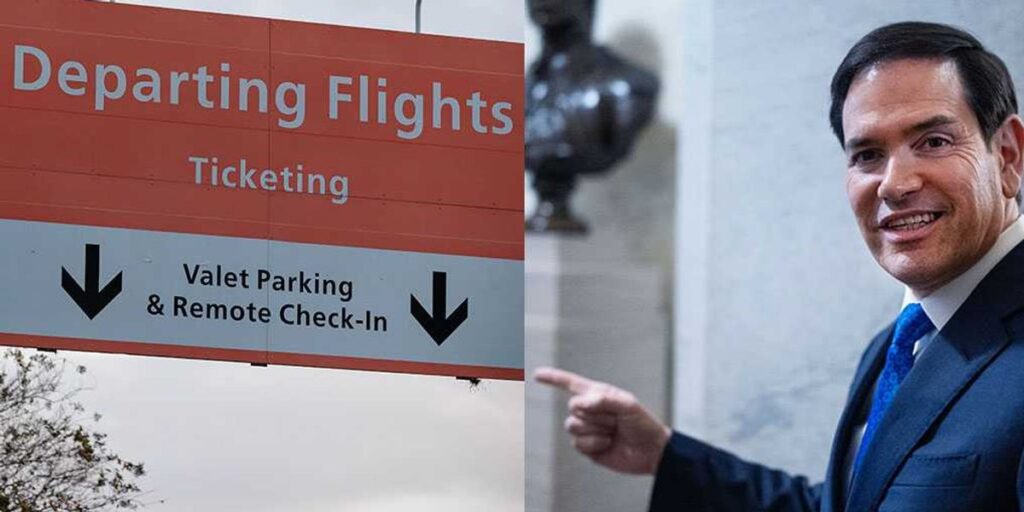
The U.S. State Department is preparing to revoke tens of thousands of B-1 and B-2 visas issued over the past decade to foreign nationals who have sought or are seeking asylum in the United States. This move targets individuals who have used temporary tourist and business visas as a means to remain in the country indefinitely, a practice officials describe as an abuse of the immigration system.
Crackdown on Visa Misuse
According to U.S. officials and State Department documents obtained by the Associated Press, Secretary of State Marco Rubio’s department will begin revoking these visas as part of a broader effort to enforce immigration laws more strictly. More than 200,000 foreign nationals could be affected initially.
Deputy Secretary of State Christopher Landau emphasized the frustration with what he called “bogus asylum claims,” noting that asylum is intended as a narrow protection for those persecuted based on race, religion, nationality, membership in a particular social group, or political opinion.
“The system has long been swamped by frivolous asylum claims,” Landau said, pointing out that the backlog causes delays in adjudicating legitimate cases while applicants often establish roots in the U.S. by working and having children during the process.
Understanding B-1 and B-2 Visas
The B-1 visa is designed for short-term business activities, such as attending commercial negotiations or conferences, and explicitly excludes employment in the United States. The B-2 visa is for tourists visiting friends or relatives, seeking medical treatment, or vacationing.
In fiscal year 2024 alone, over 6.49 million B-1/B-2 visas classified as “Temporary Visitor for Business and Pleasure” were issued, alongside millions of other related visa types.
Coordination with Homeland Security
State Department spokesman Thomas Pigott confirmed that the department is working with the Department of Homeland Security (DHS) to identify and revoke visas of those who entered as short-term visitors but subsequently filed for asylum to remain permanently.
While the exact number of revocations remains dynamic and will occur on a rolling basis, the initiative signals a significant shift in immigration enforcement policy.
The DHS deferred comment to the State Department, which did not immediately provide further details.
Expert Perspectives on Enforcement
Simon Hankinson, senior research fellow at the Heritage Foundation’s Border Security and Immigration Center, described the move as “good housekeeping.” He noted that asylum fraud is a common method for migrants to circumvent immigration laws and remain in the West.
“Anyone claiming asylum here is clearly no longer doing what they said they would when they got a visa,” Hankinson said. “Visitors are not supposed to break our laws or overstay their welcome.” He added that visa applicants must demonstrate strong ties to their home country, which contradicts the requirements for asylum seekers.
Implications for Visa Holders and Asylum Seekers
Foreign nationals whose visas are revoked will lose their status as temporary visitors, though they may not face immediate deportation. Those who have already been granted asylum can continue the process toward green cards and citizenship, unaffected by the visa revocation.
However, individuals denied asylum could be subject to deportation and would likely be barred from obtaining future visas due to the high risk of overstaying or illegal entry.
Conclusion
The State Department’s planned revocation of B-1 and B-2 visas issued to asylum seekers represents a targeted effort to address what officials see as abuse of the temporary visitor visa system. By coordinating with DHS, the administration aims to reinforce immigration rules and reduce the backlog caused by frivolous asylum claims. While the policy will not affect those granted asylum, it signals a tougher stance on visa misuse and a renewed focus on immigration enforcement.
Source: Read the original reporting.