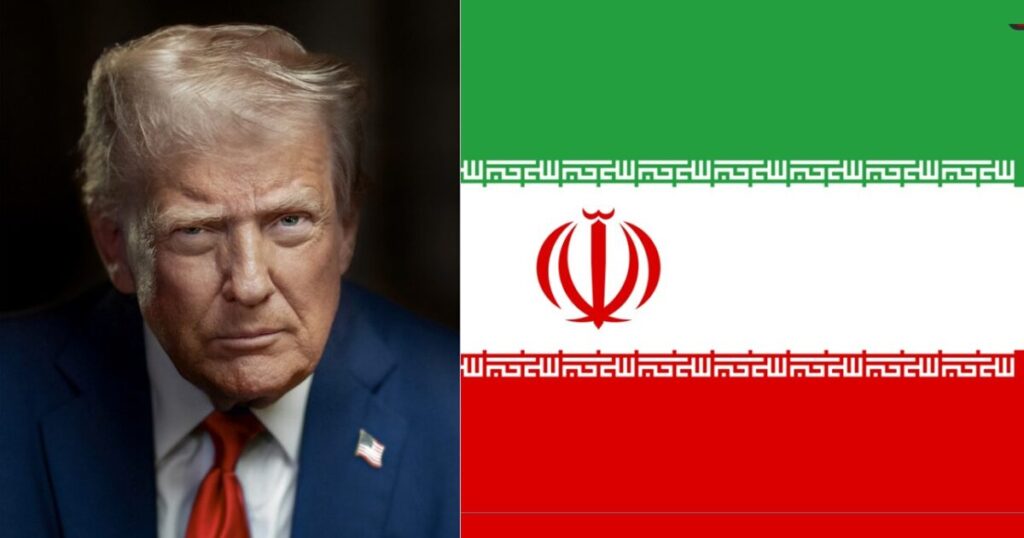
Former President Donald Trump has announced what he calls an “ECONOMIC D-DAY” against Iran, signaling a significant escalation in the United States’ economic warfare aimed at crippling Tehran’s financial and military support networks. This comprehensive strategy focuses not only on Iran itself but also on the countries and entities that facilitate its economic survival, including China, Russia, and several Middle Eastern and Asian nations.
Expanding Sanctions Beyond Iran
Trump’s plan involves imposing secondary sanctions on any country or institution that provides financial lifelines to Iran. These include oil smuggling operations, swap lines, cash transfers, exchange houses, ship registries, and front companies. The former president warned that any involvement in these activities would result in “TREMENDOUS Economic Consequences.”
This announcement came shortly after a 60-day negotiation window with Tehran expired without progress, nearly six months into the ongoing conflict involving the U.S. and Israel against Iran. Treasury Secretary Scott Bessent had foreshadowed this intensified approach, indicating a new wave of sanctions was imminent.
The Current Economic Pressure on Iran
Since April, the U.S. has been conducting “Operation Economic Fury,” which includes sweeping sanctions targeting Iran’s oil, shipping, and financial sectors, alongside a naval blockade of Iranian ports. Despite these measures, Iran’s Islamic Revolutionary Guard Corps (IRGC) continues to sustain itself through support from third-party countries willing to bypass sanctions.
Experts note that the new element in Trump’s strategy is the focus on secondary sanctions aimed at these third countries, which have been crucial in maintaining Iran’s economic lifelines.
Iraq’s Role in Sustaining Tehran
Iraq has become a key player in supporting Iran’s regime, primarily through oil smuggling schemes. The U.S. Treasury has sanctioned an Iraqi-Kittitian businessman, Waleed al-Samarra’i, for operating a shipping network that blends Iranian oil with Iraqi oil, selling the mixture as purely Iraqi to evade sanctions. This illicit trade generates hundreds of millions of dollars annually for both the Iranian regime and al-Samarra’i.
Corruption within the Iraqi government further facilitates this support. The Treasury has designated Iraq’s Deputy Minister of Oil for diverting Iraqi oil revenues to benefit Iran and its proxy militias. Through a network of politicians, front companies, and smugglers, an estimated $1 billion is siphoned yearly from Iraq to Tehran.
Moreover, Iraq serves as a financial gateway, masking real currency transfers to Iran’s channels through paper transactions. This prompted the U.S. to block a $500 million shipment of U.S. banknotes tied to Iraqi oil revenues held in New York. Additionally, Iran supplied Iraq with 8.8 billion cubic meters of natural gas in 2023, making Iraq its largest pipeline gas customer. The U.S. has extended sanctions waivers for these gas imports, even as it rescinded waivers related to Iranian electricity.
China’s Critical Support and the Challenge of Enforcement
China, Iran’s largest trading partner, is central to the success or failure of the expanded sanctions. Chinese financial institutions and independent refineries continue to purchase Iranian oil, often circumventing U.S. sanctions through complex shadow networks based in China, Hong Kong, Dubai, Malaysia, Singapore, Panama, and Cameroon.
These hubs facilitate the purchase of discounted crude, reroute payments, and manage Iran’s “shadow fleet” of tankers. Although the UAE has cut ties with Iran’s tanker operations, other regional centers remain active in these covert networks.
China’s support extends beyond economics into military assistance. Chinese firms have exported large quantities of precursor chemicals, such as ammonium perchlorate, crucial for Iran’s ballistic missile fuel. A single shipment from Zhuhai to Bandar Abbas in early 2025 was enough to fuel hundreds of missiles. Small Chinese companies have also supplied drone engines, batteries, fiber-optic cables, and computer chips used in Iran’s Shahed-136 attack drones, despite export restrictions.
Reports indicate China secretly provided Iran with $5 billion worth of advanced weapons systems, including anti-ship missiles and air defense systems, although many were reportedly destroyed by Israeli and U.S. strikes at the start of the conflict.
The U.S. Treasury has sanctioned individuals and companies based in China and Hong Kong for facilitating weapons procurement for Iran’s military, though Beijing denies these allegations and claims strict enforcement of export controls.
Russia’s Military Assistance and the Interconnected Support Network
Russia has directly aided Iran by supplying drone components, ammunition, and explosives via the Caspian Sea, replenishing Tehran’s military stockpiles depleted by U.S. and Israeli attacks. China’s support for Russia has also prolonged the war in Ukraine, creating a complex triangle of cooperation between the three nations.
The financial and military support for Iran and Russia runs through overlapping infrastructures, including shared shadow fleets, front companies, and shell entities based in Hong Kong. These networks facilitate the movement of sanctioned oil and payments, enabling both Iran and Russia to sustain their military efforts despite international sanctions.
Potential Impact and Challenges Ahead
Experts suggest that effective secondary sanctions and embargoes targeting China and Russia for their military and financial support of Iran could help degrade the evasion and supply networks sustaining the world’s two largest conflicts: the war in Ukraine and the U.S.-Israel conflict with Iran.
However, the success of this strategy depends heavily on the White House’s commitment to rigorous enforcement across all parties involved. Sanctions against one country or conflict will have limited impact unless applied comprehensively to all nations supporting these intertwined wars.
Conclusion
Trump’s declaration of an “ECONOMIC D-DAY” against Iran signals a bold attempt to dismantle Tehran’s support networks by targeting not only Iran but also the countries enabling its survival. The approach hinges on expanding secondary sanctions to choke off financial and military assistance from China, Russia, Iraq, and other nations.
While the plan could significantly weaken Iran’s economy and military capabilities, its effectiveness will ultimately depend on the U.S. administration’s resolve to enforce sanctions uniformly and the international community’s willingness to cooperate. The interconnected nature of these support networks means that piecemeal efforts are unlikely to succeed, making comprehensive action essential to altering the course of these ongoing conflicts.
Source: Read the original reporting.